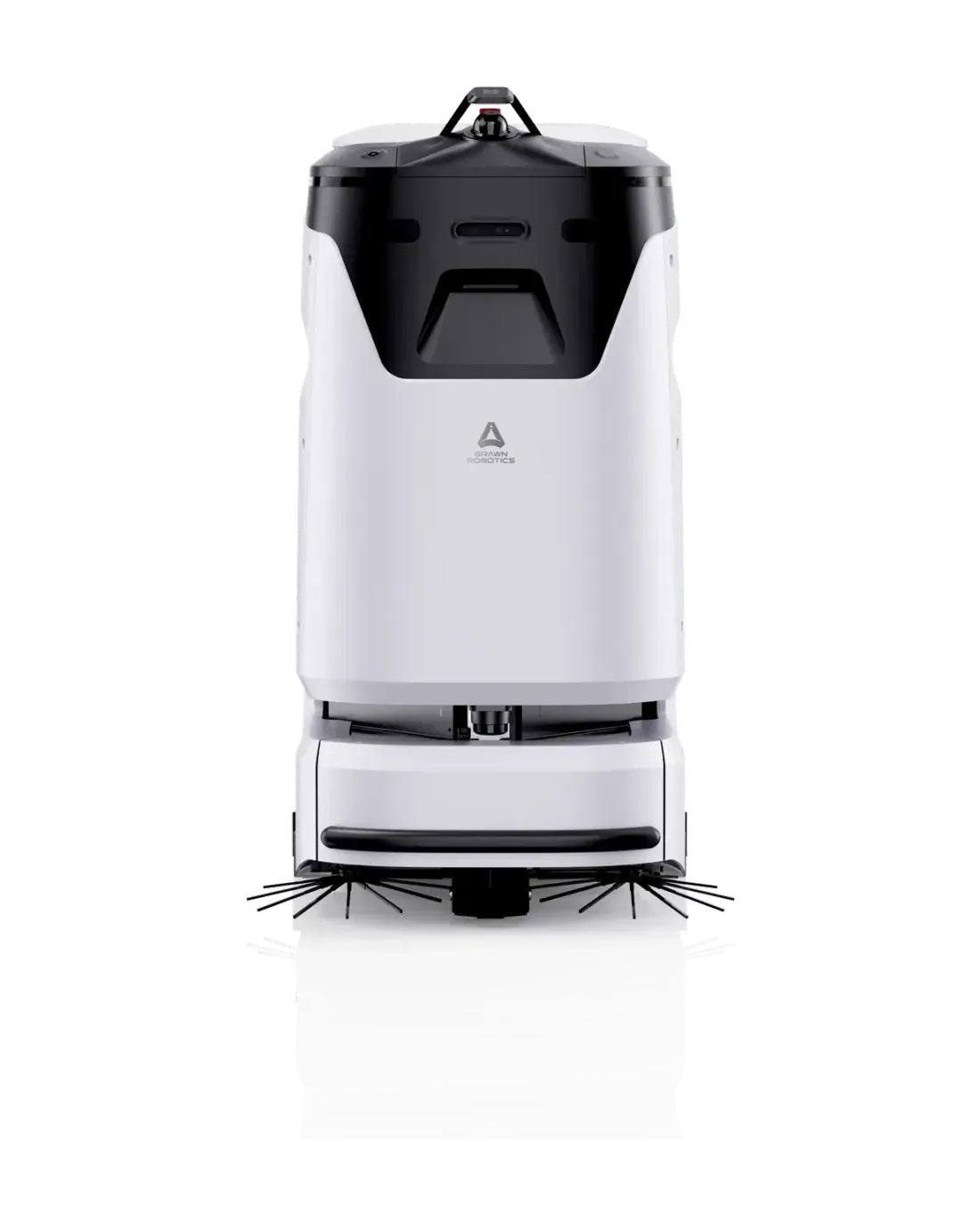
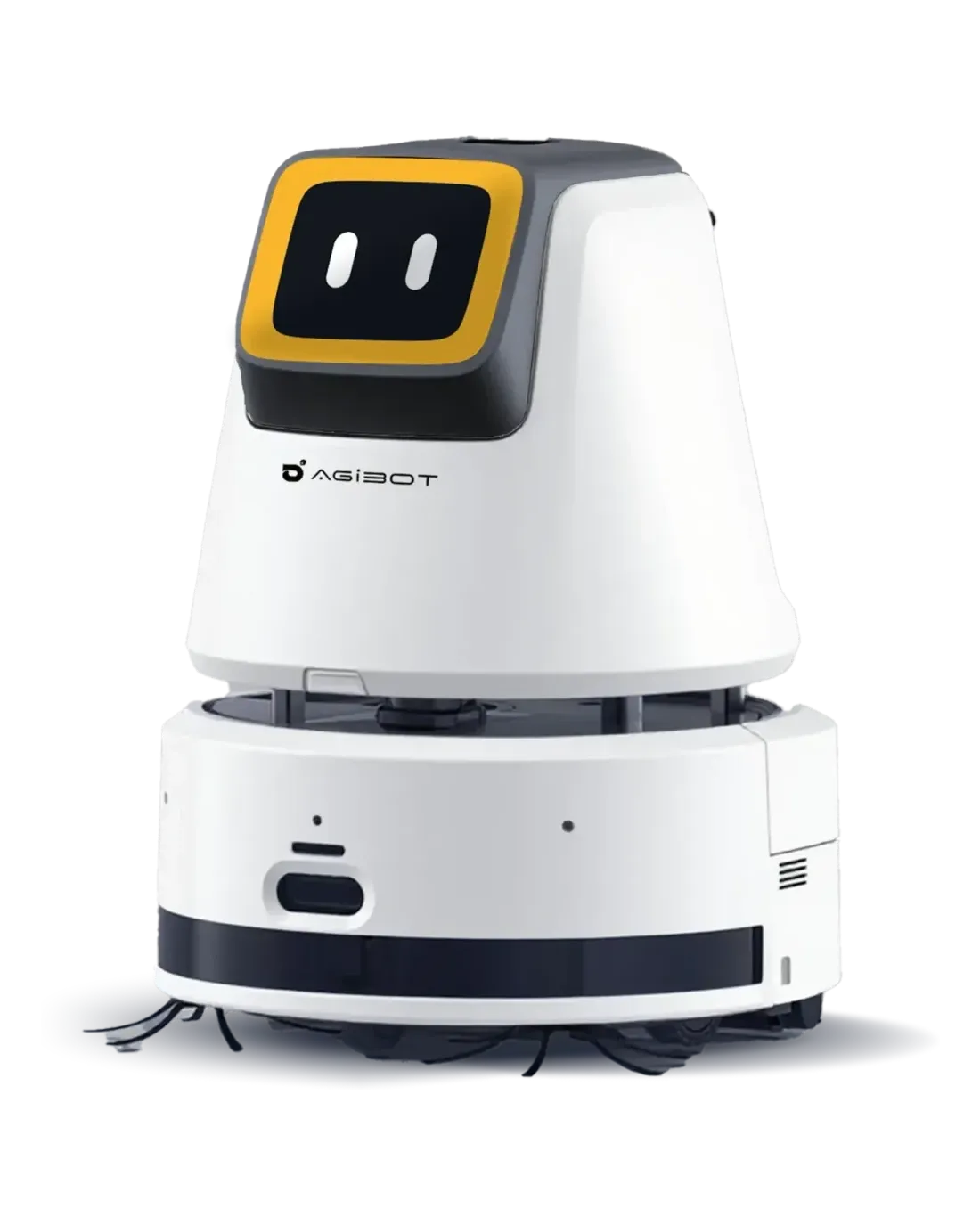
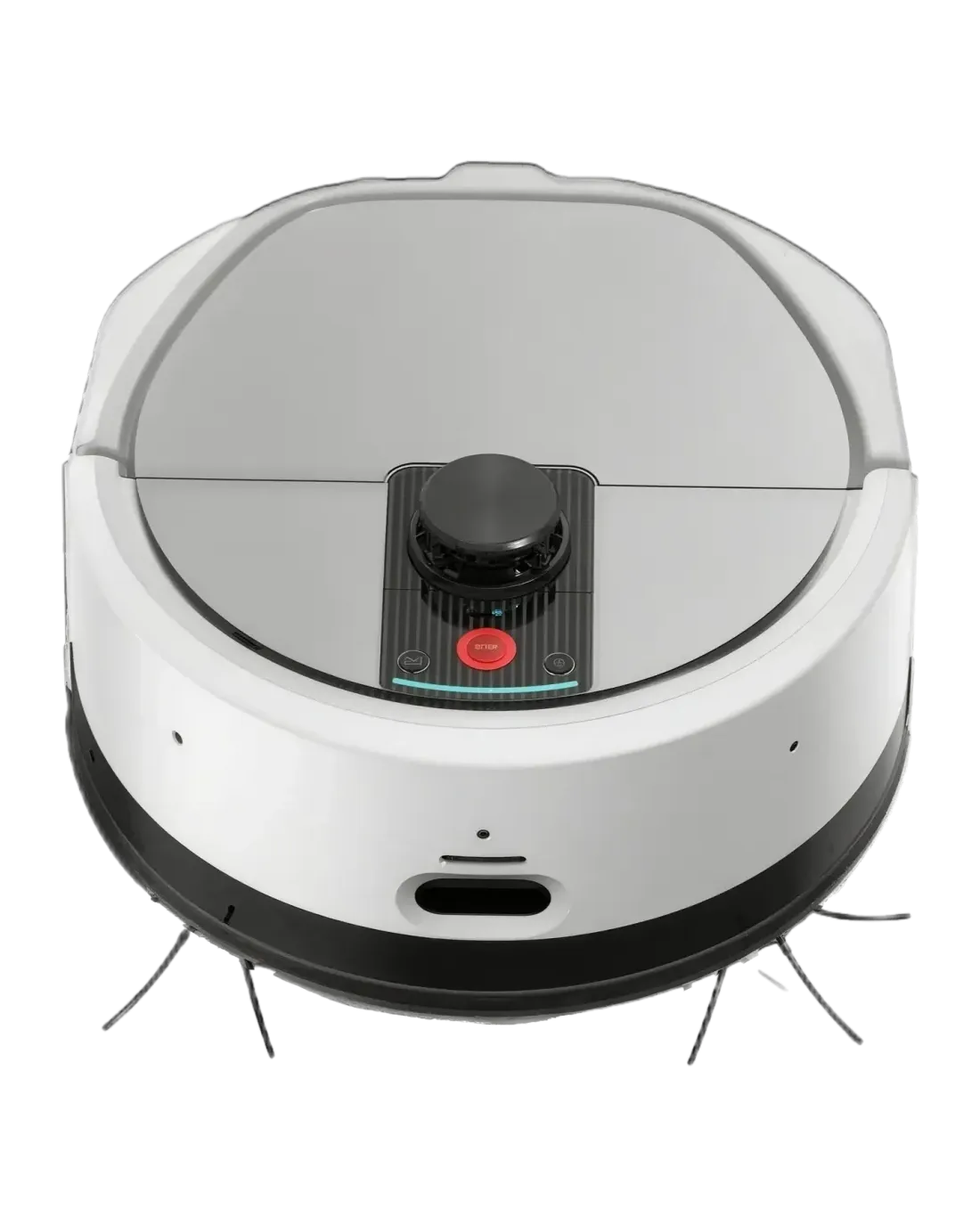
People and dirt move
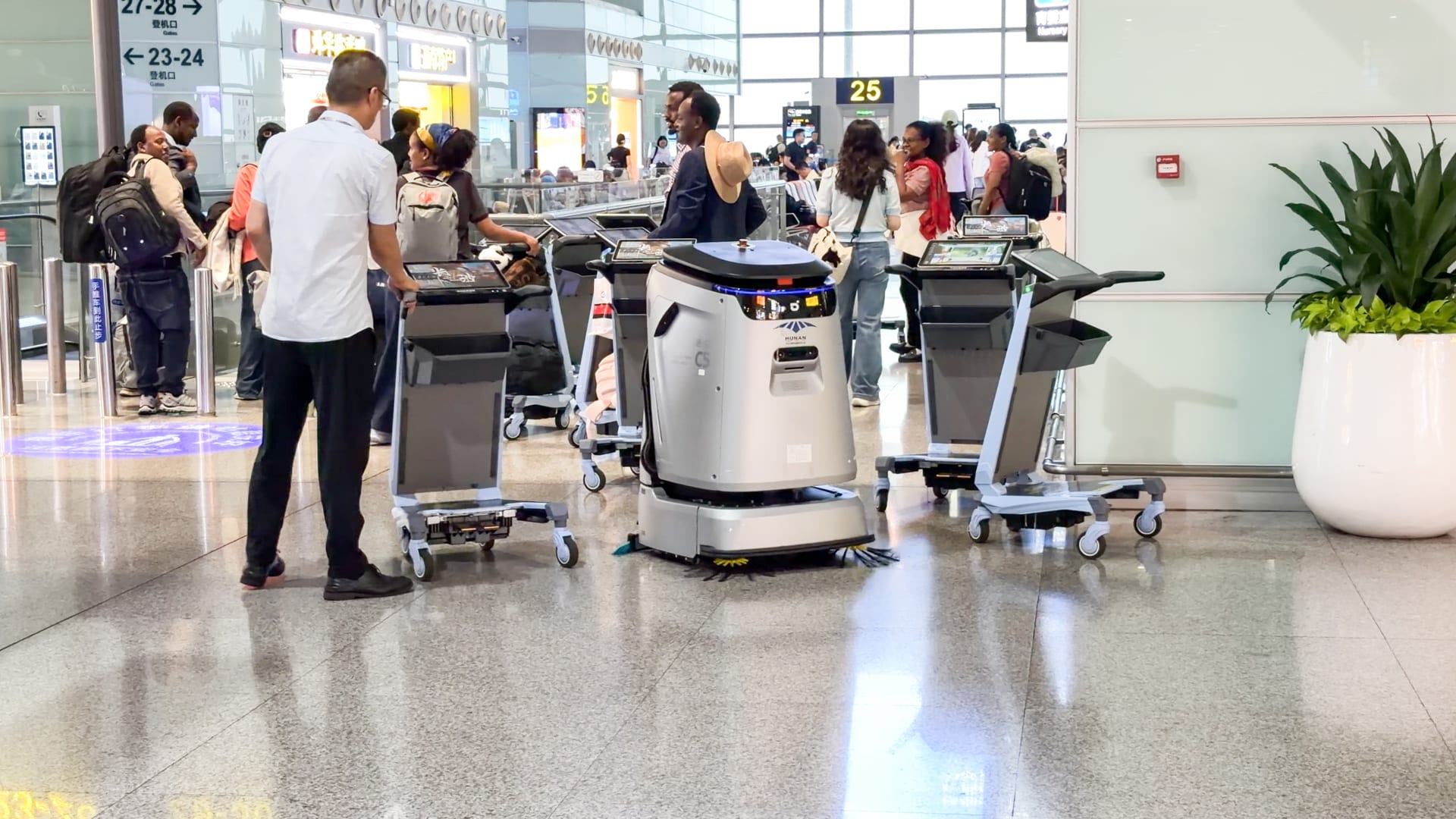
Queues form at security, passengers stop with luggage, and trolleys cross the cleaning line. Entrances bring grit, gates collect paper and food outlets leave oil — a single mode cannot cover it all.

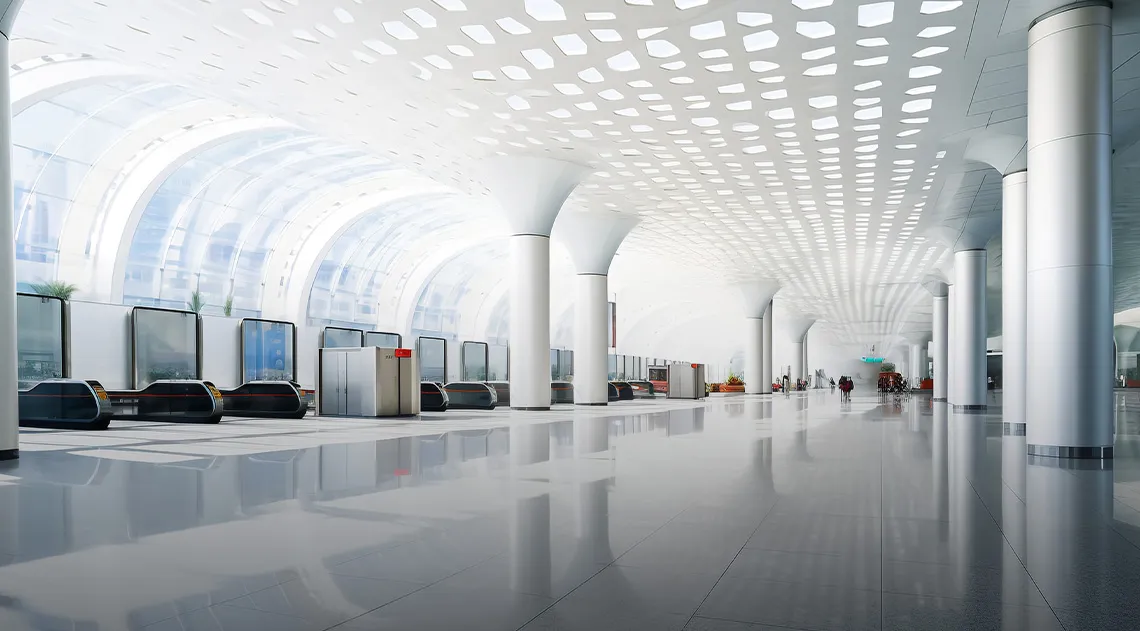
Tens of thousands of square metres, several levels, long corridors and access-controlled zones — cleaning has to keep passengers moving, leave no wet floor, and fit short windows.
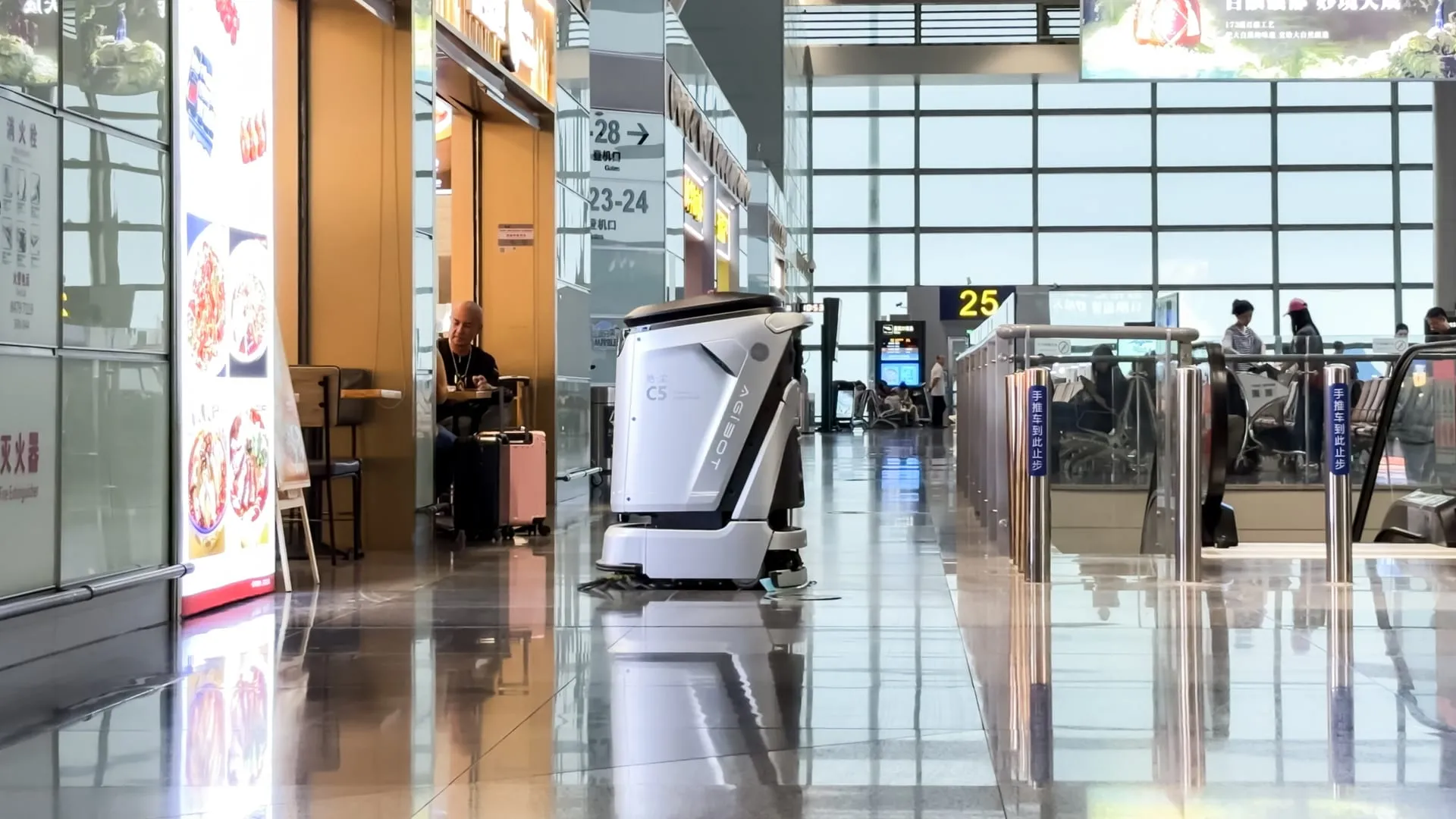
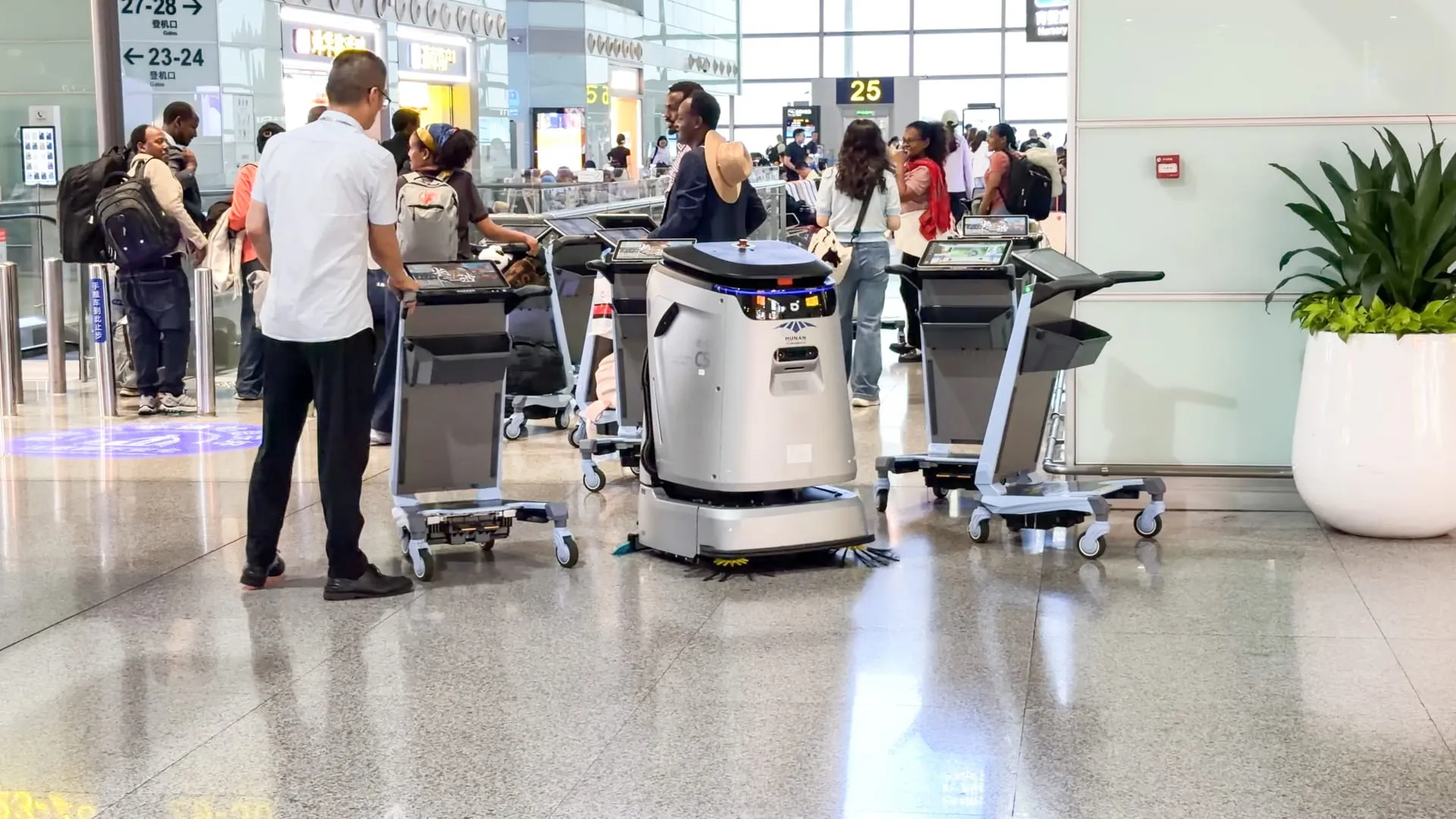
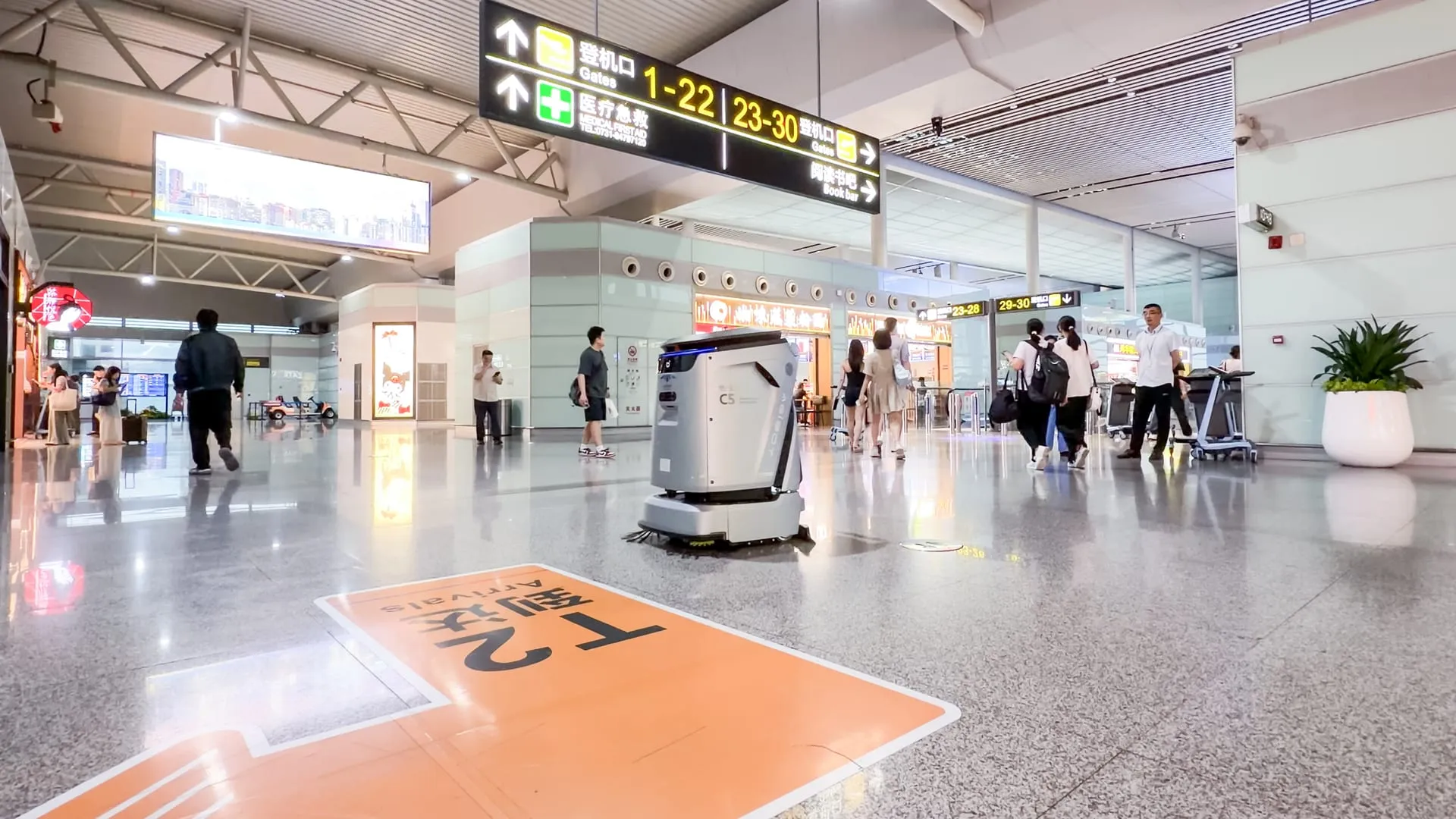
What the site looked like before the robots arrived.
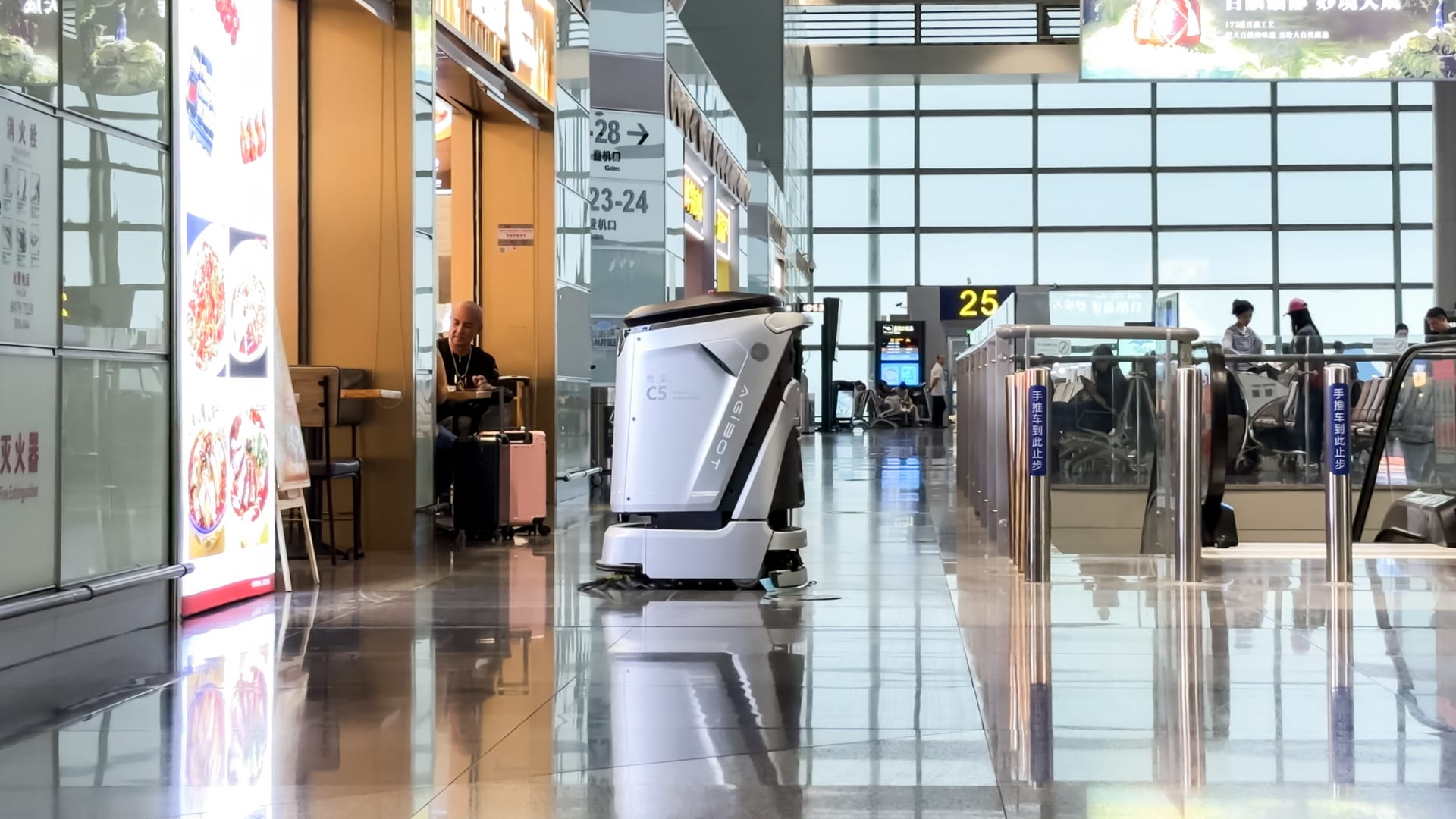
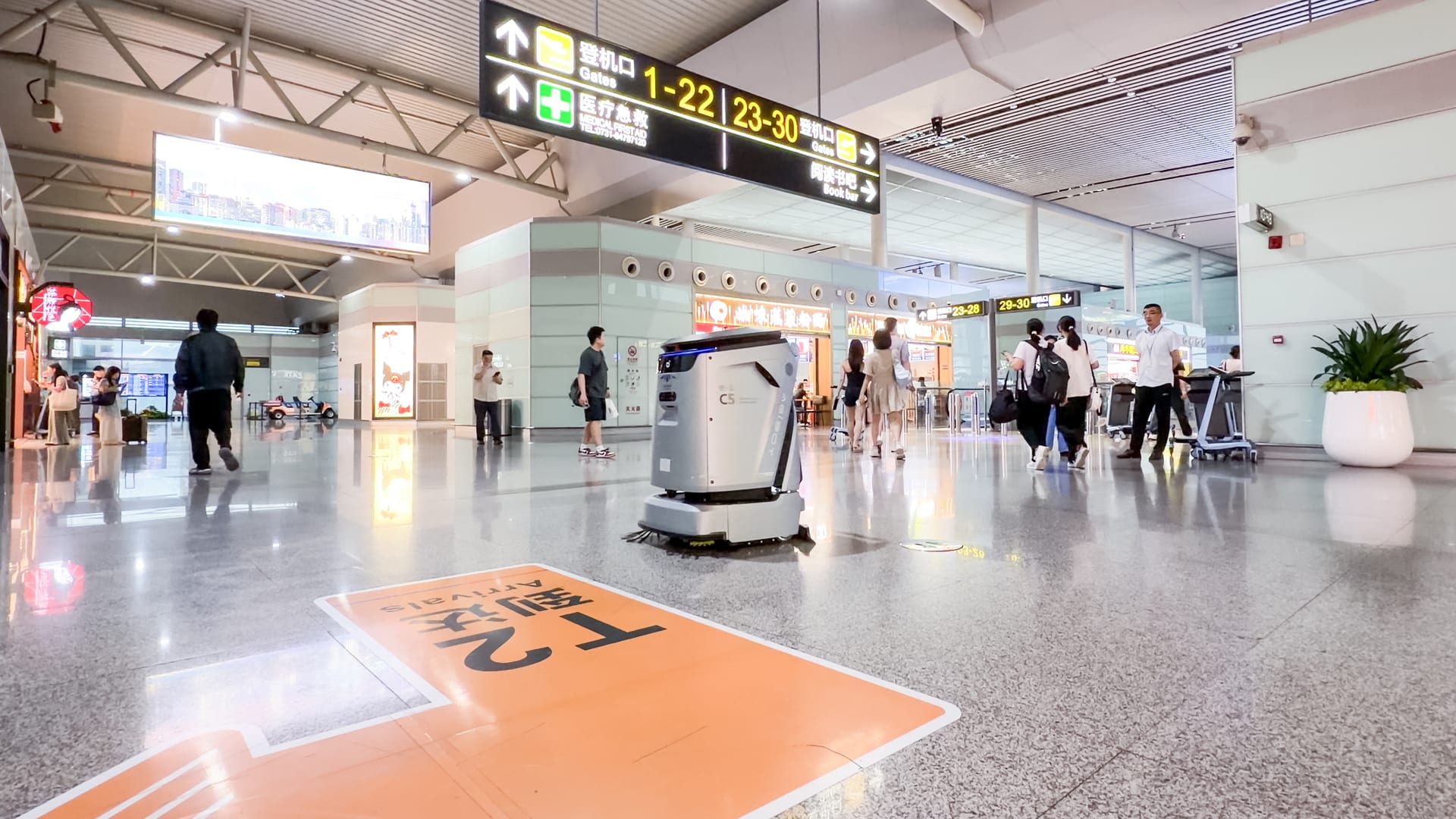
A large airport · Terminal halls and boarding areas
Queues form at security, passengers stop with luggage, and trolleys cross the cleaning line. Entrances bring grit, gates collect paper and food outlets leave oil — a single mode cannot cover it all.
Cleaning windows are short. Lifts, escalators and access control split the route, and every manual handover breaks the run.
How the machines were put to work.
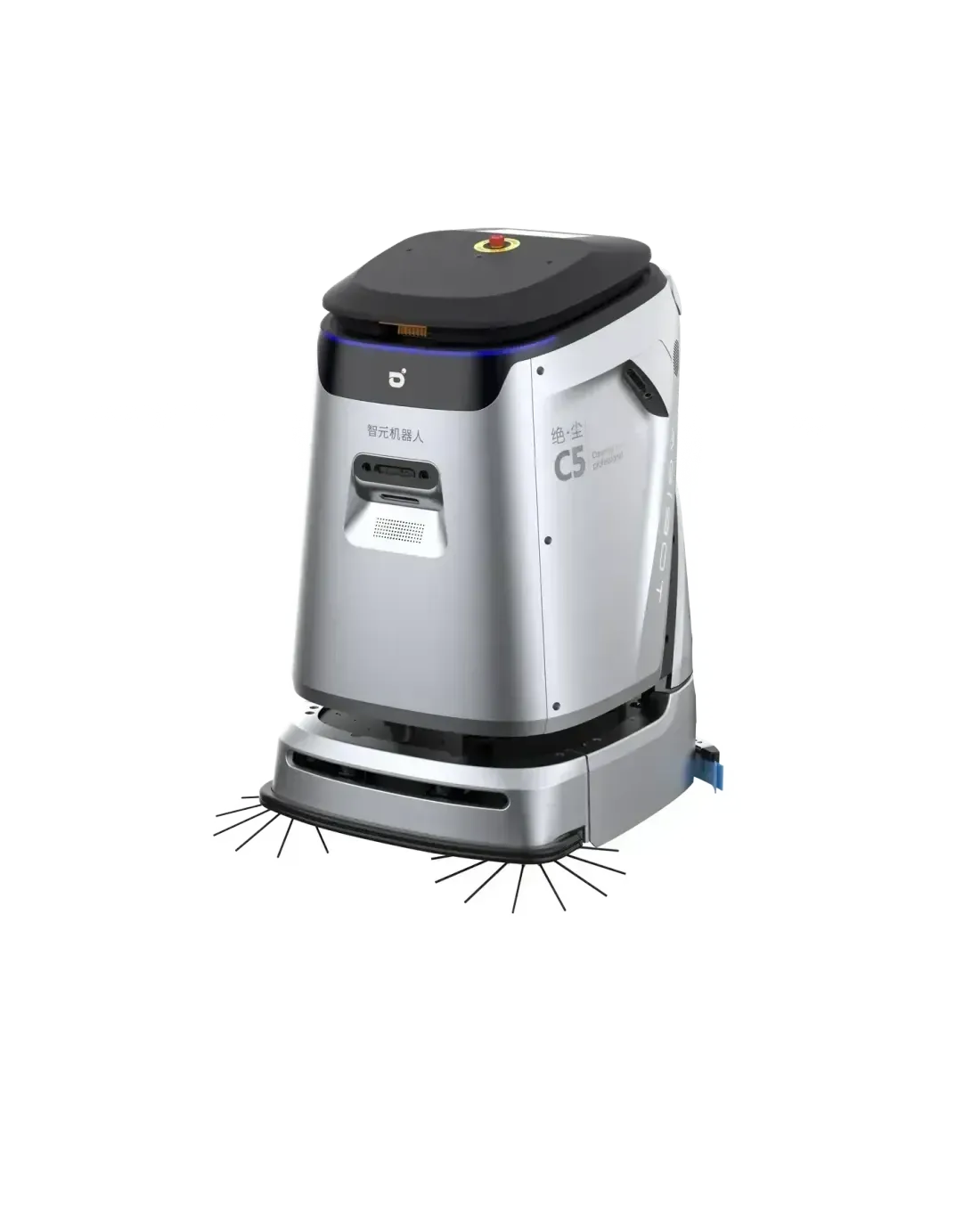
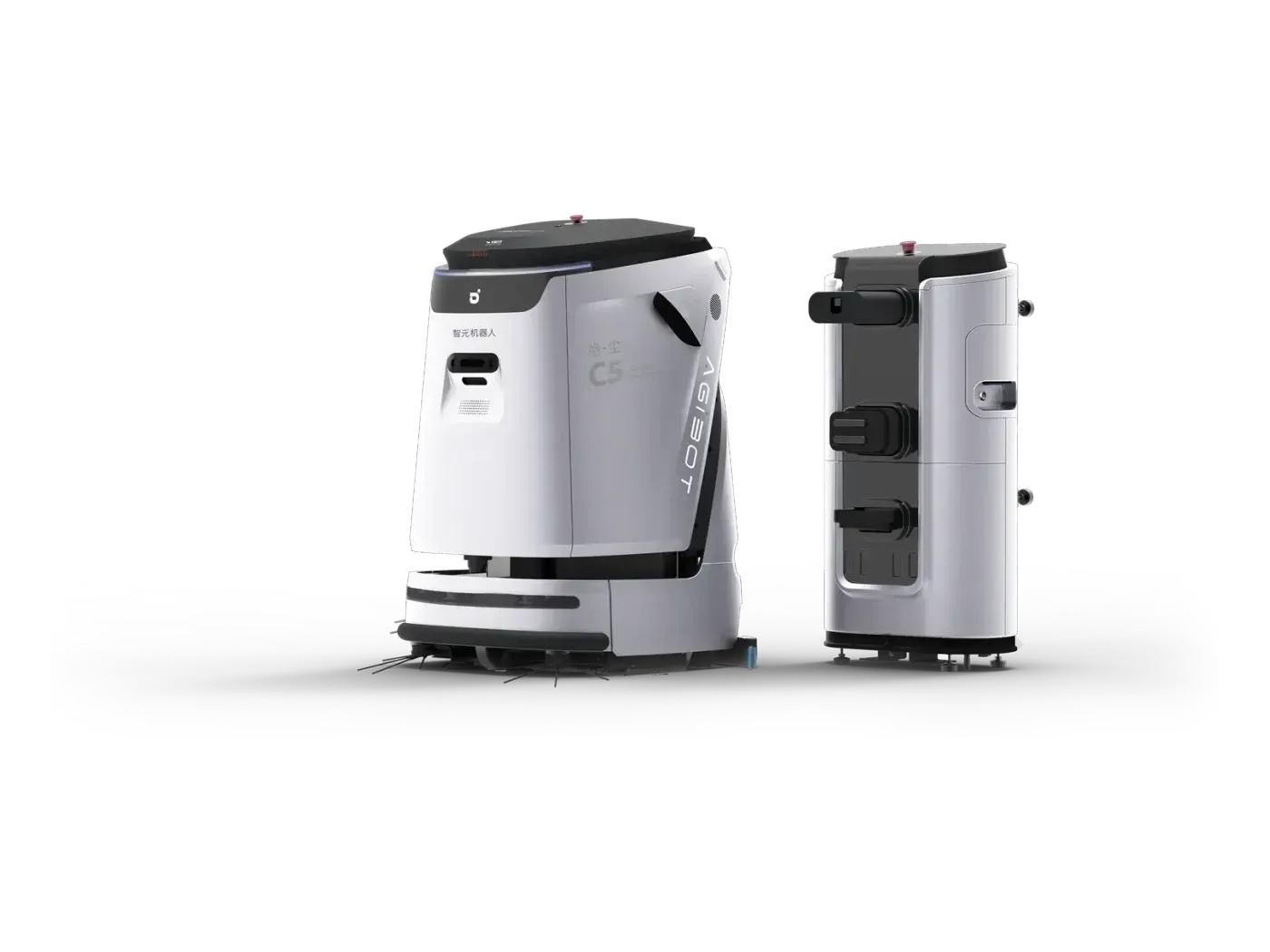
Lidar and vision identify people, luggage and moving obstacles, and the route adjusts on the spot. A dual-chamber squeegee with wastewater treatment pulls the water back, so the floor behind the pass is dry. Blind-spot start-stop, drop detection, collision warning and dual safety redundancy keep the machine predictable in a crowd.
The airport links lifts and access control, so C5 moves between floors without an escort. A dispatcher can send it to a spill from the cloud; after the task it returns to the workstation to charge, refill, drain and rinse. Schedules, alarms and reports stay in one view.
The same route follows the site, not a shift handover.
Cleaning continues while passengers move; the route yields rather than closes.
Long corridors and gate areas get the full pass.
The terminal is cleaned end to end before the first wave.
Each project states the venue, the scale and the result the site tracks. Client names are withheld; figures are reported as the project supplied them.