
Frequently asked questions
The questions that come up in most first conversations, answered in short. If yours is not here, ask us directly.
No question matches that word yet.
Ask us directlyCleaning ability
What the machines clean, how wide they clean, and what the figures mean.
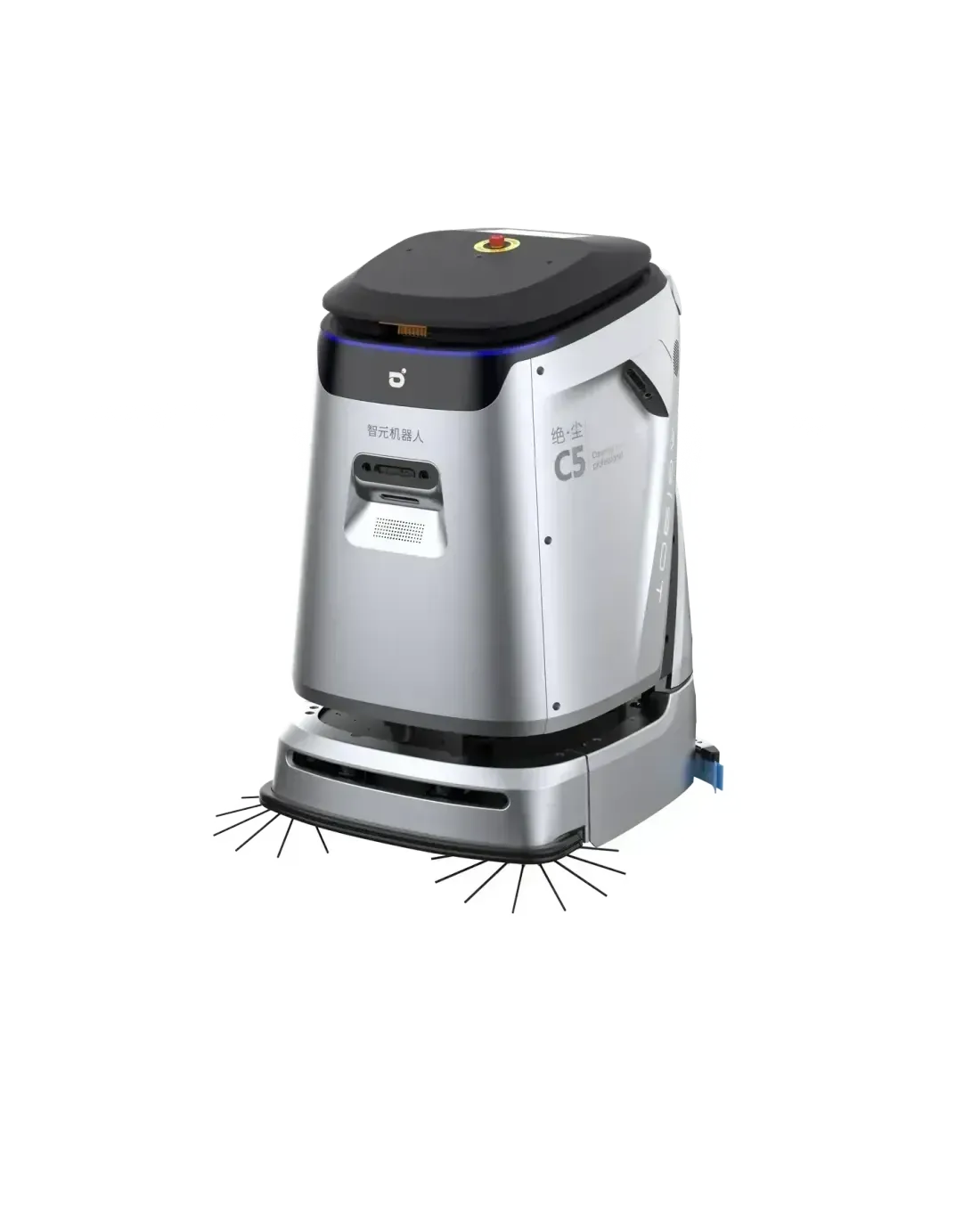
What does the C5's 95% debris collection rate measure?
It describes collection efficiency for common debris found at the site; it is not a percentage of floor area. The answer set therefore does not tie the figure to a test area.
Is 1,980 m²/h the real cleaning efficiency of the C5?
It is the maximum under specified conditions. The confirmed site range is about 700–1,500 m²/h and falls further in crowded areas or sites with many narrow aisles.
What do the C5's 550 mm and 848 mm widths measure?
550 mm is the scrubbing width. With both side brushes extended, the sweeping width is 848 mm. Use both values when comparing doorway access and cleaning coverage.
Is the C5's 25 kg down pressure fixed or adjustable?
The down pressure is adjustable up to 25 kg. The current answer set does not provide separate automatic pressure values for tile, epoxy or concrete floors.
How do the C5's two V/W rollers work?
The front roller is V-shaped and the rear roller W-shaped. They do not have separate water or vacuum circuits. Debris is lifted and thrown into the dustbin ahead of the front roller while the machine continues scrubbing.
What does the C2P's 300–700 m²/h efficiency range mean?
The range covers sweeping, vacuuming, wet mopping and scrubbing. For standard scrubbing, the nominal straight-line maximum is 700 m²/h; real output falls with floor type, soiling, obstacles and detours.
What are the C2P's 370 mm and 510 mm widths?
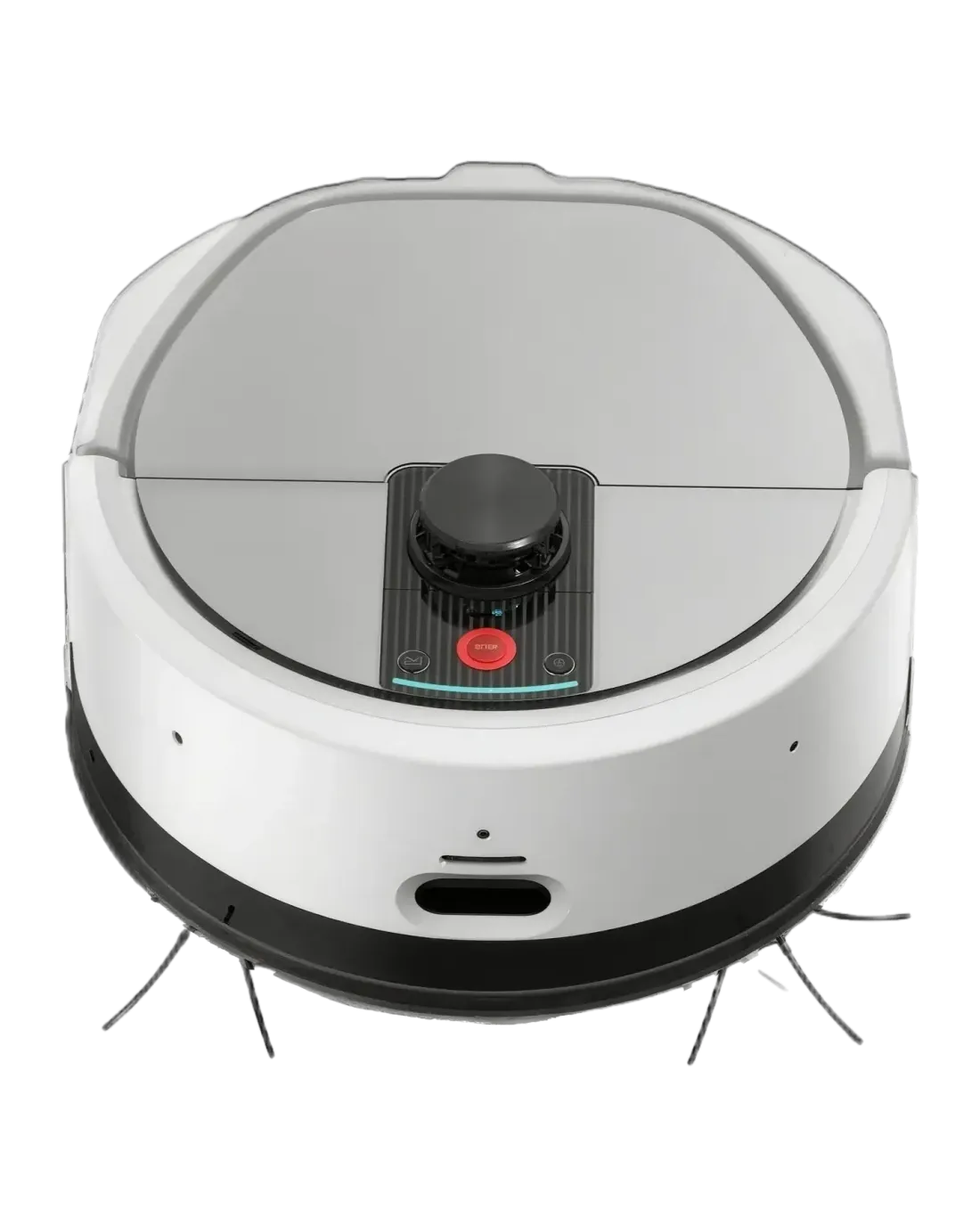
370 mm is the effective scrubbing width. With both side brushes, sweeping coverage is 510 mm. The body width without side brushes is also 510 mm.
Which C2P mode corresponds to the 60 dB(A) noise figure?
60 dB(A) applies to quiet wet mopping, not to maximum power. Standard mode is specified at 65 dB(A); suction and high-power modes are louder but do not have separate published values.
Which carpet types does C2P support?
Short-pile carpet and carpet mats are supported. Long-pile carpet is outside the intended use because it can become tangled, and the manual advises against it.
Fit and clearance
Clearance, thresholds, slopes and weight — the numbers that decide whether a site fits.
How many machines does one site need?
A 3,000 m² epoxy workshop and a 3,000 m² marble lobby need different machines. Start with the cleanable area and the floor, then the cleaning window and the soiling. A single mid-size machine often covers a mixed site; large floors are usually split by zone.
What passage and turning space does C5 need?
One-way passage is 900 mm, a right-angle turn requires 1,200 mm, and the turning radius in scrubbing mode is 1,720 mm. Check all three against the actual route, not only the doorway.
Does the C5's 15 mm obstacle height apply while cleaning?
No. 15 mm is the travel-state limit and the machine does not clean while crossing. Higher thresholds should be given a concrete or rubber ramp.
What is the minimum passage width for C2P?
A straight one-way passage needs 650 mm. Automatic turning needs about 700 mm, which includes the space required for the body to rotate.
Is 520 mm the length or the width of C2P?
520 mm is the length in the direction of travel. The body is 510 mm wide without side brushes, and the sweeping coverage with both brushes is 500 mm, which stays within the body width.
Is the C2P's 25 mm obstacle height a cleaning or travel value?
25 mm is the vertical travel-state limit. The roller lifts and water stops while crossing, then the saved cleaning mode resumes without a manual reset.
Runtime and charging
Runtime, charging, tanks, and the conditions each figure is measured under.
Which battery chemistry and cycle life does C5 use?
C5 uses a 24 V 80 Ah LiFePO4 battery with BMS. The stated life is two years or 2,000 full cycles, after which about 80% of initial capacity remains.
How long does it take to charge the C5, and how much power does it use?
Automatic charging at the station takes about 1.5 h and is rated at 1,800 W. Manual charging is 1,200 W with a 1,500 W peak.
Is the C5's 3 h scrubbing runtime battery or clean-water limited?
3 h is the measured scrubbing runtime and the shorter of the battery and clean-water constraints. Dust mopping runs 8 h with the roller brush running and 10 h without it.
How are the C5's 90 L of water split between clean and wastewater?
The robot has two 45 L tanks: 45 L clean water and 45 L wastewater. The combined 90 L capacity should not be described as 90 L of clean water.
What are the C5's dustbin and filter-basket capacities?
The dustbin holds 1.8 L and the filter basket 2.5 L. The dustbin is physically separated from the clean-water tank, and filtered debris is separated from wastewater.
What are C2P battery voltage, energy and chemistry?
The battery is rated at 22.4 V with 380.8 Wh total energy and uses LiFePO4 chemistry. BMS functions include SOC monitoring, balancing and overcharge, over-discharge and temperature protection.
How long does C2P take to charge, and can it opportunity-charge?
Charging from 15% to 100% takes about 2 h at room temperature, with a charging power of 483 W. Opportunity charging during breaks is supported without harming the battery.
How do the C2P's 4 h and 2 h runtimes relate?
4 h is battery runtime. In standard scrubbing, the 4 L clean-water tank lasts about 2 h, so water is normally the first constraint; after refilling, work continues within the 4 h battery window.
Why is the C2P's wastewater tank 0.5 L smaller than the clean-water tank?
The 3.5 L wastewater tank includes a full-level sensor and physical anti-overflow arrangement. The 0.5 L difference is reserved air and safety volume; a full tank triggers an automatic return to the station.
Upkeep and consumables
Modes, consumables, and the everyday maintenance the cleaning team handles.
What does the C5's wastewater self-cleaning cycle use?
The standard sequence is spray, rinse and drain. Rinse time is adjustable to site soiling and one cycle uses no more than 10 L. Disinfectant or deodorant can be added manually.
Do the C2P's four cleaning modes switch automatically?
Automatic switching is the default. A single mode can also be locked in a task or zone. A sweep-then-scrub sequence is set up as two scheduled tasks, while a normal pass can combine sweeping, vacuuming and wet cleaning.
Are automatic dust collection and mop drying included on the C2P?
Both are optional station functions. The station dustbin holds 10 L and is emptied manually; the robot body dustbin holds 1.1 L. Mop drying can be switched on or off in the platform, and its power, duration and noise are not published.
Software and intelligence
Sensors, mapping, apps and over-the-air updates.
Can a robot work at night, or around people?
Both. Machines run quietly enough for occupied buildings, and they slow, stop or route around people and obstacles rather than relying on the area being cleared. A blocked aisle becomes a detour.
How does C5 handle missed cleaning areas?
The missed-area threshold is configurable and must be at least 0.3 m². A post-task touch-up cleans only the missed area and orders multiple areas by path efficiency; continuous real-time touch-up is not offered.
Which LiDAR and vision sensors does C5 use?
C5 uses one 2D LiDAR with 300° scanning and a maximum range of 50 m, four RGBD sensors and one top-view fisheye camera. The planned upgrade is a 3D multi-line LiDAR.
How quickly does C5 replan around a dynamic obstacle?
Local replanning is generally no more than 50 ms, depending on settings and site conditions. Semantic recognition covers dozens of common objects such as people, luggage, carts, tables, chairs and potted plants.
What does the C5 mobile app support?
The iOS/Android app has separate cleaning-staff and delivery/operations roles. Cleaning staff get local settings, task reports and alarms; operations get live location, remote control, map management and data reports. Device and function permissions can be assigned by role.
Which navigation and safety sensors does C2P use?
C2P uses one 360° 2D LiDAR with 30 m range, one RGBD camera, a line-laser sensor for close low obstacles, ultrasonic sensors for glass and transparent objects, plus collision and cliff sensors. One mapping run can cover about 15,000 m².
What does the Robot Link app provide for the C2P?
Robot Link supports iOS and Android with live monitoring, remote control, scheduling, map management and data reports by role. Task reports include planned and actual area, coverage and completion rate, water use, alarms and the route trace.
Deployment and service
Deployment, training, warranty, and what happens when a machine stops.
Does a robot need building work before it can run?
Usually not. A site survey checks aisle widths, floor transitions, lift and access-control arrangements and where a docking station can stand with water and power. Anything that does need adjusting is listed in the proposal before you commit.
How long does deployment take?
Mapping and commissioning are done by your own team after training, and a single floor is typically running after that session. Multi-floor sites take longer only where lift or access-control integration is in scope.
Who looks after the machines day to day?
The cleaning team: daily checks and consumable changes, which the training covers. Everything beyond that starts with remote diagnosis. The cloud platform reports faults before anyone travels, and spare parts are held locally.
What happens if a machine stops mid-shift?
The fault is reported to the platform, and the team takes the area over manually. The robot works alongside the crew; it does not replace a shift. Remote diagnosis locates the fault before a visit is booked; on-site response and spares follow the contract.
What does a C5 docking station need, and how many robots can it serve?
The station measures 525 × 550 × 1,025 mm and weighs 38 kg. It needs a fixed installation with access to power, water and drainage, and works best near the inlet and floor drain. One station can support multiple robots, but one to two C5 units per station is recommended.
How do C5 OTA updates work?
OTA is supported. A partner can push updates automatically through the deployment software during idle time, or a person can confirm an update through the cloud platform. The robot must be online with a stable connection. OTA is free, usually every two to three months, subject to the release schedule.
What utilities and space does the C2P station need?
The station requires a grounded 220 V~/50 Hz socket, water inlet at 0–0.7 MPa with the supplied pressure reducer and filter, a nearby drain and stable Wi-Fi. Leave about 2 × 1.5 m in front for docking and avoid direct sunlight and damp areas.
How does the C2P's mobile water cart work without fixed plumbing?
The cart holds 30 L clean water and 40 L wastewater and measures 600 × 300 × 830 mm at about 14.8 kg. The station can draw water from and drain into the cart, but refilling and emptying remain manual. For one to two shifts per day, service is typically weekly.
Commercial and compliance
Pricing, ROI and certifications.
Which certifications are confirmed for C5?
The current answer set confirms CE, FCC, cTUVus, KC and RCM for C5. Market-specific documents should still be issued with the delivered configuration.
Which certifications and quality-system approvals are confirmed for C2P?
The answer set confirms CB and CE for C2P, with the machine designed to EN 60335-2-72 and EN IEC 63327, and confirms ISO 9001 for the quality system. cTUVus, KC, whole-machine PSE and NSF are not currently held; no separate ISO 13849 PL d report is available.